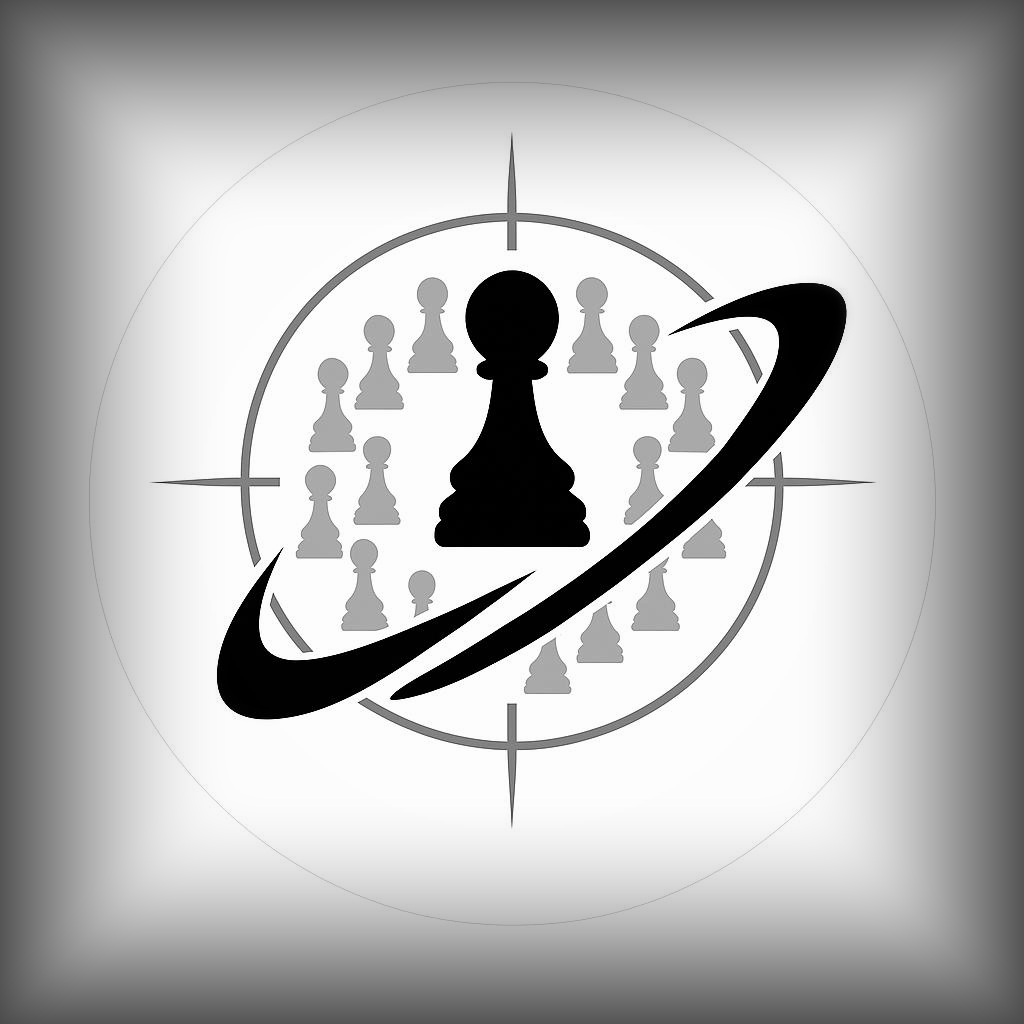


While reflecting on the symbolic elements in my framework, I noticed something unexpected.
I did not start with the intention of designing a fictional world. My goal was simply to understand a few recurring patterns in human interaction and conflict. For that purpose, I began using a small set of symbols: a pawn, a boomerang, a compass, a voice that provokes reactions, and what I call a “source”.
However, during a conversation about these elements, something interesting became clear. When these symbols were placed together, they naturally began to form a coherent internal structure, almost like a small conceptual world.
In this symbolic structure, there is a board where interactions and conflicts take place. Voices provoke reactions. Boomerangs represent the way conflicts often return and escalate when people respond to each other impulsively. Within such dynamics, reactions tend to keep the system moving.
But outside that board there is another place: the source. The source is not part of the conflict itself. It represents a moment of distance and reflection. When someone reaches the source, reactions lose their immediate power. Without an audience and without returning reactions, the usual dynamics of provocation begin to fade.
Looking into the water of the source becomes a moment of self-reflection. Not about the role someone plays within the system, but about the person behind that role. From there, a choice becomes possible. When you still don’t know the answer. Maybe a safe Source can help you? The compass represents the moment when someone decides how to respond when returning to the board.
Importantly, the world itself does not change. The board remains the same. Voices may still provoke, and conflicts may still arise. What changes is how someone reacts. Others may eventually recognize this difference. When provocation no longer triggers the expected reaction, the system begins to behave differently.
I did not consciously design this symbolic world. It appeared naturally once the elements were placed together. Sometimes, when a model becomes simple enough, it reveals its own internal logic, and with it, an entire conceptual structure.
Interestingly, I didn’t design the story. I discovered it.
Leave a Reply